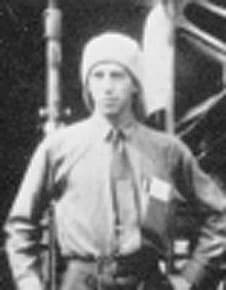
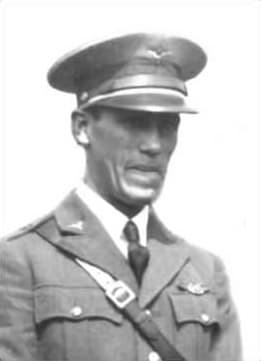
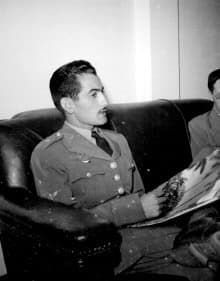
Pablo L. Sidar
1897–1930 · Mexican (born in Spain)
Military aviation — aerobatics and long-distance goodwill flights
WHY YOU SHOULD KNOW THEM
Led the first Mexican goodwill flight tour through Central America, the Caribbean, and South America (1929)
THEIR STORY
Pablo Sidar's own life story is genuinely uncertain at the edges, which is worth being honest about rather than smoothing over. Most historical documentation shows he was born in Zaragoza, Spain, around 1897 and registered there as Pablo Sidar Puras; after his father died, he emigrated to Mexico around age twelve with a cousin and was recorded in the port city of Veracruz. Some official Mexican sources instead list his birthplace as Ramos Arizpe, Coahuila — possibly reflecting how thoroughly he was considered Mexican by the time of his death, whatever his actual birthplace. Whatever the exact details of his early life, Sidar grew up in Mexico during the Revolution and served as a cavalry officer before switching to the newer, more dangerous world of military aviation. He entered the Mexican Military Aviation School in 1920 and graduated as a pilot officer. The 1920s in Mexico were not peaceful — the young Air Force was repeatedly called into action against internal rebellions and uprisings, and Sidar flew combat missions against the de la Huerta rebellion (1924), the Yaqui uprising (1926–27), the Cristero War (1926–29), and two further military rebellions in 1927 and 1929. He rose steadily through the ranks: squadron commander, chief of the First Aerial Regiment, an instructor at the Military Aviation School, and eventually colonel. It was flying, not fighting, that made him famous. In 1925, Sidar and two other pilots, Roberto Fierro and José Fonseca, became known for aggressive aerobatic flying — tight loops, dangerous maneuvers, flying that looked reckless to onlookers. The nickname that stuck was "El Loco," the crazy one, and Sidar embraced it so completely that he started signing his name "Pablo L. Sidar" from then on, making the nickname part of his professional identity. In August 1929, Sidar was given the highest-profile assignment of his career: leading Mexico's first goodwill flight through nearly every country in Central America, the Caribbean, and South America, flying a Douglas aircraft named *Ejército Mexicano* with a mechanic, Arnulfo Cortez. Flights like this were a form of diplomacy in the 1920s and 30s — a way for a country to demonstrate its aviation capability and build international goodwill, the same idea behind Emilio Carranza's flight to the United States the year before. The tour was a success, but Sidar wasn't finished. In May 1930, flying a different aircraft — an Emsco B-3 named *Morelos* — he and co-pilot Carlos Rovirosa Pérez attempted a roughly 40-hour nonstop flight from Oaxaca to Buenos Aires, Argentina. They ran into a severe storm near Limón, Costa Rica, and the aircraft went down over the sea; neither man survived. President Pascual Ortiz Rubio ordered his remains placed in Mexico City's Rotonda de las Personas Ilustres, the resting place reserved for the country's most distinguished citizens.
WHAT THEY ACTUALLY DID
As a military aerobatic and long-distance pilot, Sidar flew combat missions during multiple internal conflicts, then led a goodwill flight tour spanning Central America, the Caribbean, and South America — the kind of extended-range, multi-country flight planning that long-distance aviation still requires today.
WHAT YOU'RE LEARNING THAT CONNECTS
His final flight, like Carranza's, ended in a storm — a sober reminder of why weather briefing and go/no-go decision-making are treated as such a serious part of real flight training today, not paperwork to rush through.
DID YOU KNOW?
His nickname "El Loco" (the crazy one) became such a part of his identity that he started signing his professional name "Pablo L. Sidar" because of it.Historians still don't agree on whether he was actually born in Spain or Mexico — a genuine unresolved question in his biography.
A NOTE ON HISTORICAL UNCERTAINTY
Sources disagree on basic facts: his birth year is given as both 1895 (an official Mexican government source) and 1897 (most other sources), and his birthplace is listed as either Zaragoza, Spain — where most historical documentation points — or Ramos Arizpe, Mexico, which some later Mexican sources claim, possibly because he was raised in Mexico from childhood and later identified as Mexican-born.
SOURCES
Wikipedia (ES); gob.mx (Presidencia de la República); INAH Mediateca / Fototeca Nacional
Photo: Fototeca Nacional, INAH · CC BY-NC-ND 4.0 · Source