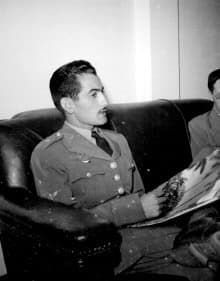
Gustavo Salinas Camiña
1893–1964 · Mexican
Military and naval aviation
WHY YOU SHOULD KNOW THEM
Piloted what Mexican military history records as the first air-to-ship combat attack (1914); later led the modernized Mexican Air Force during World War II
THEIR STORY
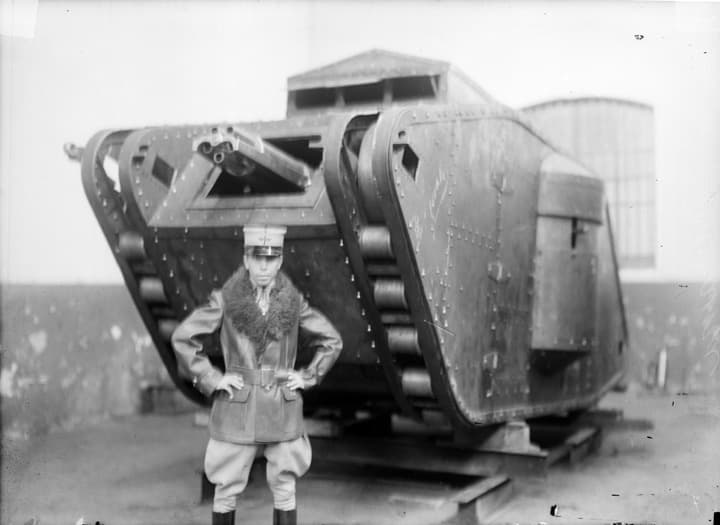
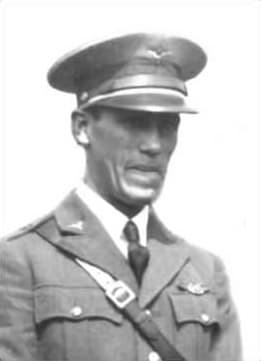
Gustavo Salinas Camiña was born in Cuatro Ciénegas, Coahuila, in 1893, into a family connected by marriage to Venustiano Carranza, who would soon become one of the central figures of the Mexican Revolution. That connection mattered: in 1912, President Francisco I. Madero sent five young Mexican officers to the United States to learn to fly at the Moisant Aviation School on Long Island, New York, and Salinas Camiña — reportedly after writing directly to ask for the opportunity — was one of them. He earned his pilot's license that November, one of the first Mexicans ever to do so. He returned to a country tearing itself apart. When the Revolution split into competing factions after Madero's assassination, Salinas Camiña joined the constitutionalist forces led by Álvaro Obregón and Venustiano Carranza. On April 14, 1914, flying a rebuilt Martin "Pusher" biplane near Topolobampo, on Mexico's Pacific coast, he and a mechanic bombed two gunboats — the *Guerrero* and *Morelos* — that were loyal to the rival general Victoriano Huerta, defending a friendly vessel under their attack. Mexico's own military historians describe this as the first air-to-ship combat attack in the world, predating similar aerial naval actions in the First World War. Obregón sent him a personal telegram of congratulations. A near-fatal crash on a reconnaissance flight later that year didn't slow him down — he was promoted to major weeks afterward, and by 1917, after more than a hundred combat actions, he had reached the rank of general. After the Revolution, Salinas Camiña's career alternated between military aviation administration and politics. He studied European military methods as an attaché in France and Belgium, then ran Mexico's aviation department through the early 1920s, establishing new airfields and building domestic aircraft. A political accusation tied to a 1927 rebellion — never proven — sidelined him for over a decade, during which he worked in civilian aviation. He returned to lead Mexico's military aeronautics starting in 1939, and it was in this second act that his work mattered most: as Mexico entered World War II, he organized the expanded Mexican Air Force, built the squadron that would become the famous Escuadrón 201 (Mexico's only unit to see direct combat overseas in the war), acquired modern American aircraft, relocated the national aviation school to Guadalajara, and personally traveled to inspect Allied bases in England and North Africa. Away from the cockpit, he was also a genuinely talented competitive marksman, representing Mexico in pistol and rifle shooting at the 1932 Los Angeles Olympics and winning medals at two Central American and Caribbean Games. He died in his hometown of Cuatro Ciénegas in 1964; a Mexican Air Force base was later renamed in his honor.
WHAT THEY ACTUALLY DID
As a combat pilot, Salinas Camiña flew a rebuilt biplane to bomb enemy gunboats in 1914 — one of history's first air-to-ship attacks — then decades later organized and led the modernized Mexican Air Force that fought in World War II, moving from hands-on flying to large-scale military organization.
WHAT YOU'RE LEARNING THAT CONNECTS
His 1914 attack is a real-world example of using an aircraft's basic capabilities — payload, range, and the pilot's judgment — to accomplish a mission with almost none of the instruments or systems modern students train on. It's a useful reminder of how recent, and how improvised, the fundamentals of powered flight still were in his era.
DID YOU KNOW?
He competed for Mexico as a shooter — not a pilot — at the 1932 Los Angeles Olympics, winning medals in pistol and rifle events at other international competitions too.He reportedly wrote directly to a state governor to request his own aviation training, which is how he ended up in the first group of Mexican officers sent to learn to fly in the United States.
A NOTE ON HISTORICAL UNCERTAINTY
English Wikipedia gives his birthdate as July 17, 1893, while Mexico's own military archive (SEDENA), citing his personnel file, gives July 19 — this profile uses the archive's date.
SOURCES
Secretaría de la Defensa Nacional (SEDENA/SEMAR), official biography, citing his Archivo Histórico Militar personnel file; San Diego Air & Space Museum
Photo: Subido por User:Tatehuari el 21 de Diciembre de 2006 · Public domain · Source