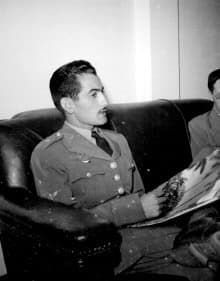
Emma Catalina Encinas Aguayo
1909–1990 · Mexican
Civil aviation
WHY YOU SHOULD KNOW THEM
First Mexican woman to receive an official pilot's license (No. 54, issued December 4, 1932)
THEIR STORY
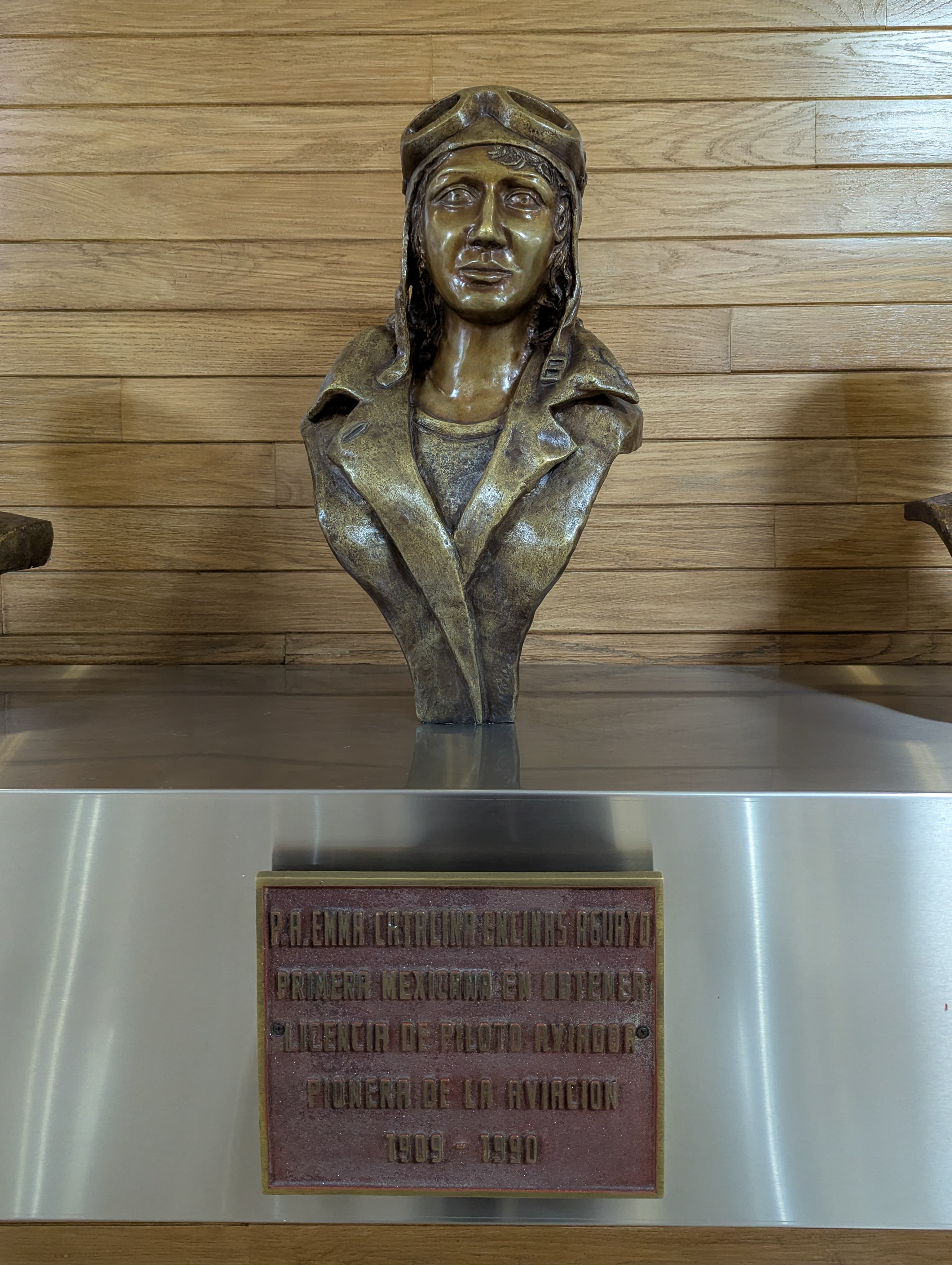
Emma Encinas Aguayo's family fled the state of Chihuahua during the chaos of the Mexican Revolution and settled across the border in El Paso, Texas, where she grew up. She was academically and artistically ambitious — she studied at the University of California and even appeared in early Hollywood films, including the 1929 picture *Rio Rita* — but it was flying that became her real obsession. Getting into the air was not simple for a woman in Mexico in the early 1930s. Encinas Aguayo was turned away by every aviation school she approached simply for being a woman. To fund her ambition, she ran a dance school in Chihuahua, and she supported herself further by translating aviation magazines and tutoring English — skills that, in a twist she couldn't have predicted, would define the second half of her life. Her break came when she followed pilot and instructor Roberto Fierro Villalobos to Mexico City after he was named head of the country's first Air Force Air Regiment. General Leobardo C. Ruiz personally authorized her to train at Balbuena Air Base, overriding the informal barrier that had kept her out everywhere else. She soloed on November 20, 1932, and received her official pilot's license — number 54 — on December 4, 1932, formalized the following year on April 12, 1934. It made her the first Mexican woman to hold an official pilot's license, a genuine milestone in a field almost entirely closed to women at the time. Encinas Aguayo stopped flying after marriage, but her story doesn't end there. Fluent in five languages, she built a second career as a translator and interpreter of real national importance — she served as an official translator for Mexican President Luis Echeverría in the 1970s. She also became a significant civic and women's-rights figure: she led the Alliance of Pan American Round Tables as Director General starting in 1962, growing the organization from 58 to 92 chapters across the Americas, and in 1953 she produced early Mexican educational television programming aimed at informing women voters. She died in 1990 at the age of 81. Today, a bust honoring her stands in the "Gallery of the Heroes of World Aviation" at Mexico City's international airport, and her personal papers are archived at the University of Texas at Austin.
WHAT THEY ACTUALLY DID
As a licensed civil pilot, Encinas Aguayo had to complete the same flight training and testing standards as her male counterparts, at a school that had to be specially authorized to admit her at all — and her later career as a professional translator shows how an aviation credential can open doors well beyond flying itself.
WHAT YOU'RE LEARNING THAT CONNECTS
Every student using this app to work toward a Part 107 or Part 61 certification is going through a process Encinas Aguayo had to fight to even access. Her path to license number 54 is a direct, human version of the licensing journey this app supports.
DID YOU KNOW?
Before she ever flew, she appeared in early Hollywood films, including the 1929 movie Rio Rita.She later became an official translator for a sitting Mexican president, decades after her flying career ended.
A NOTE ON HISTORICAL UNCERTAINTY
Another Mexican woman, María Marcos Cedillo Salas, is sometimes separately described as "the first female pilot in Mexico" for flying commercial routes around the same period — the two claims don't fully reconcile in the available sources, likely reflecting a difference between "first licensed" and "first to fly." Both women's stories are included in this app rather than picking one "first."
SOURCES
Wikipedia, citing Popular Aviation (Feb. 1934) and contemporary Mexican newspapers; University of Texas at Austin Benson Latin American Collection archive
Photo: Photo by ProtoplasmaKid, Wikimedia Commons · CC BY 4.0 · Source