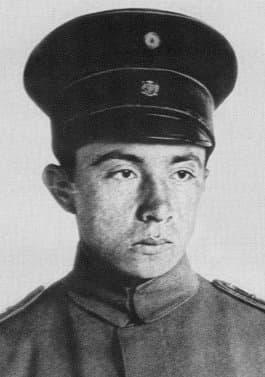
Dagoberto Godoy
1893–1960 · Chilean
Military aviation — record flights
WHY YOU SHOULD KNOW THEM
First person to fly over the Andes (December 12, 1918)
THEIR STORY
Dagoberto Godoy entered Chile's military academy in 1910 and transferred into the Military Aviation Service in 1915, becoming a lieutenant the following year. His defining flight came on December 12, 1918: flying a Bristol M.1c biplane, he took off from El Bosque, Chile, and flew through the Cristo Redentor and Uspallata mountain passes near the summit of Aconcagua — one of the tallest peaks in the Western Hemisphere — before landing safely near Mendoza, Argentina. The flight lasted about ninety minutes and reached an altitude of roughly 6,300 meters, all in an open cockpit with no heating and no supplemental oxygen system — genuinely extreme physical conditions layered on top of the technical challenge of navigating mountain passes in a fragile World War I-era biplane with no radio and no real-time weather information. It was the first time anyone had flown an aircraft over the Andes. He was promoted to captain immediately after the flight. He retired from active military duty in 1924, though Chile continued to honor him with progressively higher honorary ranks over the following decades, eventually naming him Brigadier General of the Air Force in 1957, three years before his death. His flight had an immediate ripple effect: it directly inspired Sergeant José del Carmen Ojeda's follow-up altitude record of 7,188 meters just the following year, 1919, as Chilean aviators pushed the same mountain-flying challenge even further.
WHAT THEY ACTUALLY DID
Godoy flew a fragile, unheated, open-cockpit biplane through mountain passes at extreme altitude with no supplemental oxygen, no radio, and no weather data beyond what he could personally see — a flight that pushed both the aircraft and his own body to their limits simultaneously.
WHAT YOU'RE LEARNING THAT CONNECTS
His altitude flight without supplemental oxygen is a direct, extreme illustration of exactly why modern aviation regulations require oxygen systems above certain altitudes — a real historical case of the physiological risk those rules exist to prevent.
DID YOU KNOW?
His flight was made in an open cockpit with no heating and no supplemental oxygen, at an altitude of roughly 6,300 meters.His flight directly inspired a follow-up Chilean altitude record of 7,188 meters just one year later.
SOURCES
Wikipedia
Photo: Unknown authorUnknown author · Public domain · Source