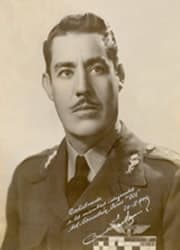
Antonio Cárdenas Rodríguez
1903–1969 · Mexican
Military aviation — expeditionary force command
WHY YOU SHOULD KNOW THEM
Commander of the Fuerza Aérea Expedicionaria Mexicana (FAEM), Mexico's only overseas combat deployment
THEIR STORY
Antonio Cárdenas Rodríguez served in the Mexican Air Force for nearly four decades, joining in 1925 and not retiring until 1963. His early career put him in the middle of Mexico's internal conflicts of the era: he flew in the campaign against Yaqui resistance in Sonora and against Cristero forces in Jalisco and Colima during the late 1920s, at a time when aviation itself was still a new and dangerous tool of warfare. He was also chosen for some of Mexico's earliest civil aviation infrastructure work, flying the Mexico City–Nuevo Laredo airmail route. In 1940, as a colonel, he undertook something closer to Emilio Carranza's earlier goodwill flights: a roughly 35,000-kilometer tour across Latin America, logging 118 flight hours in a Lockheed 12 aircraft he named "Presidente Carranza," after the revolutionary leader. He completed the tour and returned to Mexico in September 1940, having represented Mexican aviation across an entire continent. His defining moment came in 1945. When Mexico organized the Fuerza Aérea Expedicionaria Mexicana — an expeditionary force built around Escuadrón 201 — to fight alongside the United States in the Pacific theater, Cárdenas Rodríguez was named its commander on January 1, 1945. Under his command, the unit deployed to the Philippines and fought in the Battle of Luzon, becoming, in the words of Mexican military historians, the only Mexican military unit ever to fight outside Mexico itself. Leading that deployment meant coordinating not just pilots but the full expeditionary structure — logistics, ground crew, and coordination with American forces — across the Pacific. Nicknamed "El Charro," he retired as a Division General, one of the Mexican military's highest ranks, and was decorated with the Legion of Merit. Ixtepec Air Base No. 2 in Oaxaca is named in his honor, a lasting mark of his role commanding Mexico's only wartime overseas deployment.
WHAT THEY ACTUALLY DID
As commander of an expeditionary force, his job went beyond flying: he had to organize an entire deployed unit's logistics, coordinate with a foreign allied military, and ensure Escuadrón 201's pilots and ground personnel functioned as a real fighting force thousands of miles from home.
WHAT YOU'RE LEARNING THAT CONNECTS
His 1940 goodwill flight across Latin America is a real example of long-distance flight planning decades before GPS — navigation, fuel planning, and weather all had to be worked out largely by dead reckoning across an entire continent.
DID YOU KNOW?
Before commanding troops in WWII, he flew a 35,000-kilometer goodwill tour of Latin America in a plane named after former president Venustiano Carranza.He was nicknamed "El Charro."
A NOTE ON HISTORICAL UNCERTAINTY
Sources disagree on his exact birth date, giving either September 20 or October 6, 1903.
SOURCES
Wikipedia (EN/ES); Museo Nacional de la Aviación y el Espacio
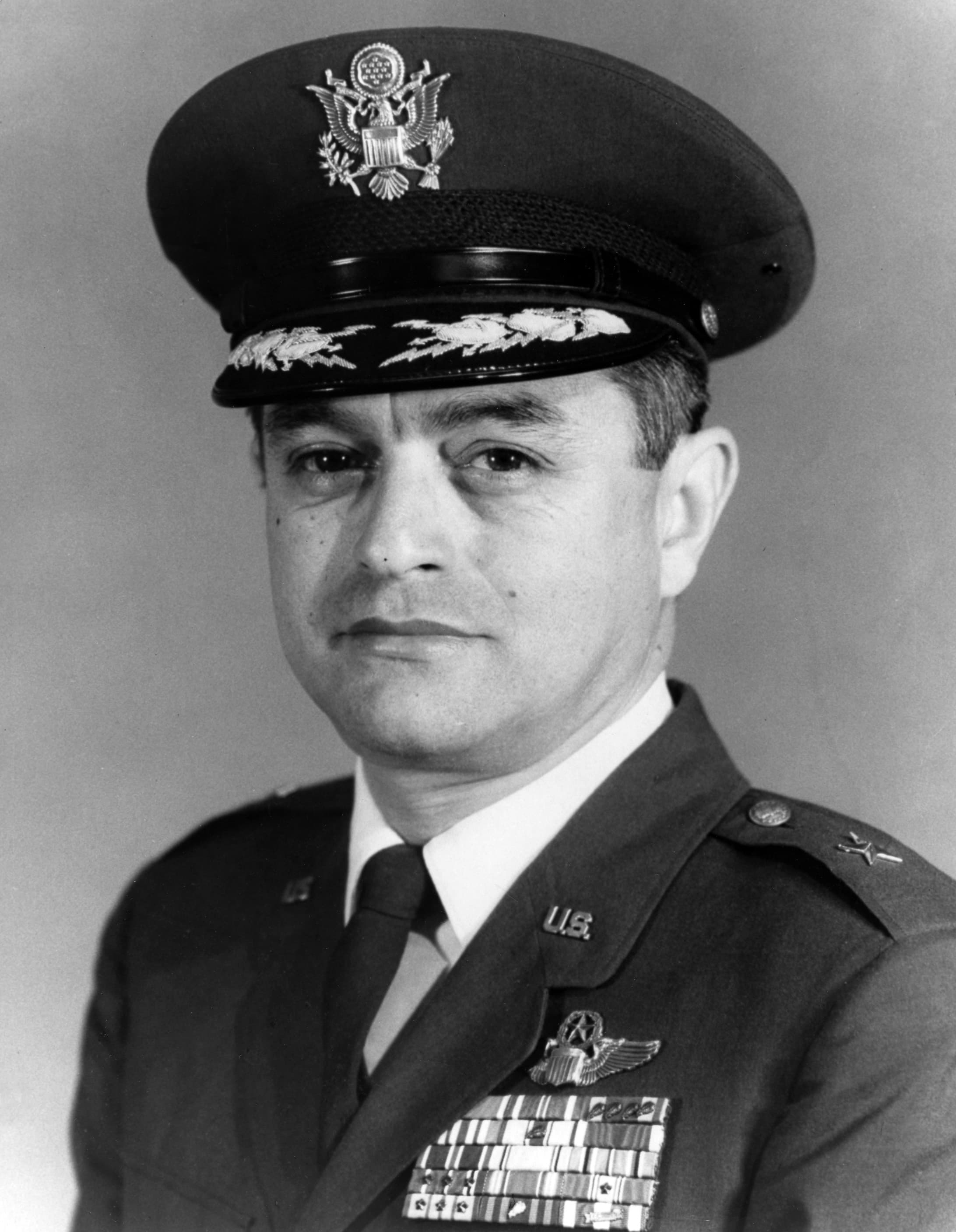
Photo: www.sedena.gob.mx · CC BY-SA 3.0 · Source