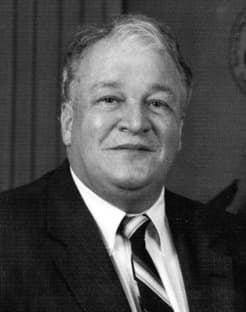
John K. Lauber
b. 1942 · American
Aviation safety — human factors research
WHY YOU SHOULD KNOW THEM
Coined "cockpit resource management" and led the 1979 NASA workshop that formally introduced what became Crew Resource Management
THEIR STORY
John K. Lauber earned a PhD in neuropsychology from Ohio State University in 1969, building a research career studying how the human mind actually performs under real working conditions — a very different starting point from most aviation-safety careers built around engineering or piloting. As Chief of the Aeronautical Human Factors Research Office at NASA Ames Research Center, Lauber worked from a specific, sobering piece of data: research at the time showed that 60 to 80 percent of aviation crashes involved human error, not mechanical failure — meaning skilled, well-trained crews were still making fatal mistakes even when their aircraft worked perfectly. Lauber coined the term "cockpit resource management" to describe a training approach built around fixing that problem directly, and in 1979 he chaired the pivotal NASA workshop that formally introduced the concept to the aviation industry. The core insight was about communication and hierarchy, not technical skill: crashes were happening because copilots hesitated to challenge a captain's mistake, or because a cockpit's information didn't get shared and cross-checked effectively under stress. Training crews to communicate better and share authority appropriately — what's now called Crew Resource Management, or CRM — directly addressed that gap, and it eventually became mandatory training for essentially every airline pilot in the world. Lauber's career continued through several major aviation-safety roles: he served on the National Transportation Safety Board from 1985 to 1989, appointed by President Reagan, then became Vice President of Corporate Safety at Delta Air Lines, and later Chief Product Safety Officer at Airbus. He is himself a qualified pilot, holding both airplane and helicopter ratings and type ratings on the Boeing 727 and Airbus A320 — meaning his human-factors research was grounded in genuine flying experience, not purely academic study.
WHAT THEY ACTUALLY DID
As a research psychologist, Lauber studied why skilled, well-trained flight crews still made fatal errors — often communication breakdowns or reluctance to challenge authority in the cockpit — and used that research to design training that changed how flight crews communicate and share decision-making, a human-factors fix rather than a mechanical one.
WHAT YOU'RE LEARNING THAT CONNECTS
Crew Resource Management is a direct, real-world example of Crew Resource Management as a formal safety topic — the actual research and reasoning behind why pilots are specifically trained to communicate and cross-check each other under pressure.
DID YOU KNOW?
He is himself a qualified pilot with type ratings on the Boeing 727 and Airbus A320, alongside his research career.The research behind CRM found that 60-80% of crashes at the time involved human error, not mechanical failure.
SOURCES
U.S. House of Representatives official biography; Prabook
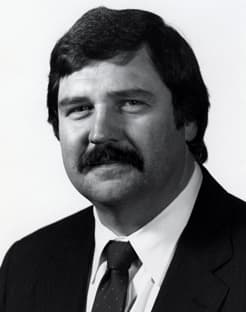
Photo: National Transportation Safety Board · Public domain · Source